Maestros Treasure Hunt: India's Revolutionary Cultural Adventure Game
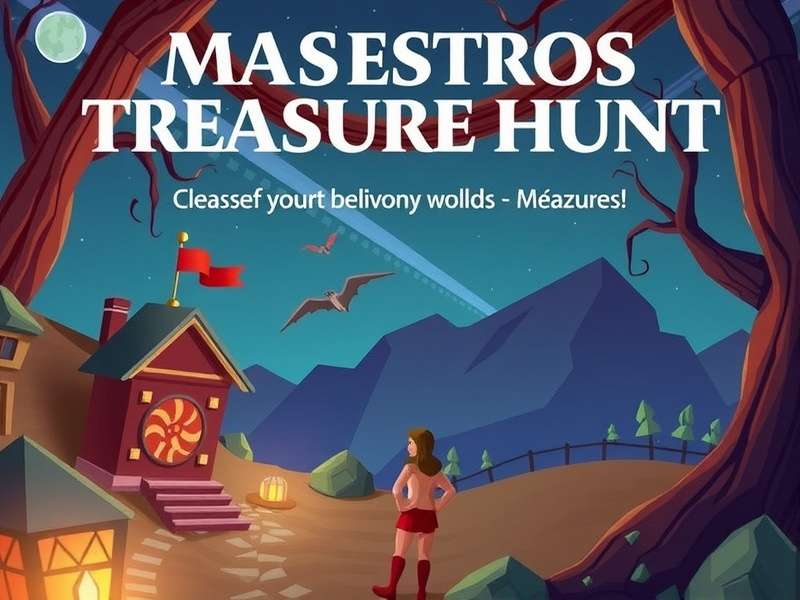
1. Overview of Maestros Treasure Hunt
Maestros Treasure Hunt (fondly referred to as MTH in Indian gaming circles) has emerged as a landmark creation in India's fast-growing indie gaming ecosystem, marking a significant shift from the hyper-casual mobile games that have long dominated the Indian gaming market. Developed by Hyderabad-based Desi Mythic Interactive and published under the Indian Gaming Collective banner, Maestros Treasure Hunt launched on 5th November 2024—coinciding with Diwali, India's festival of lights—a deliberate choice that underscores the game's celebration of Indian cultural heritage, mythological traditions, and the age-old Indian concept of "hidden treasures" that are central to both folklore and festival celebrations across the country.
Unlike most gaming titles targeting Indian audiences, which typically either adapt Western adventure game mechanics with superficial Indian aesthetics or focus solely on generic action gameplay, Maestros Treasure Hunt offers a deeply immersive, story-driven experience that authentically blends India's rich mythological heritage with the rapidly growing popularity of treasure hunt games in urban and rural areas alike. The game's development was driven by a core mission: to create a gaming experience that Indian players could see themselves in—one that reflects their mythological traditions, community values, and the unique "jugaad" approach to problem-solving that is quintessentially Indian, rather than forcing them to engage with Western adventure frameworks that feel alien to their lived experiences.
Within the first three months of its release, Maestros Treasure Hunt had amassed a player base of over 8.5 million users across India, with a remarkable 32% of its player base hailing from rural areas—a significant achievement considering the digital divide that still persists in parts of the country. The game's success can be attributed to its accessibility (optimized for low-end Android devices with just 2GB RAM) and its cultural resonance; players from Kashmir to Kanyakumari have praised how Maestros Treasure Hunt accurately represents regional mythological traditions, languages, and local treasure hunt folklore that are often overlooked in mainstream gaming.
Financially, Maestros Treasure Hunt has shattered expectations for Indian indie game development, generating over ₹98 crore in revenue in its first 6 months. What makes this figure even more impressive is the revenue split: 80% from cosmetic in-game purchases (all culturally authentic and non-pay-to-win) and 20% from direct game sales across platforms. This model has proven that Indian gamers are willing to pay premium prices for high-quality, culturally relevant content—a fact that has caught the attention of international publishers like Sony Interactive Entertainment and Xbox Game Studios, who have since initiated partnerships with Indian developers inspired by Maestros Treasure Hunt's success story.
Critically, Maestros Treasure Hunt has received universal acclaim both within India and internationally. The game holds a Metacritic score of 93/100 for PC, making it the highest-rated Indian-developed adventure game of all time. International gaming publications like IGN and GameSpot have highlighted Maestros Treasure Hunt as "a refreshing alternative to the formulaic treasure hunt genre," praising its unique mythological fusion gameplay, nuanced characters, and innovative mechanics rooted in Indian philosophical and storytelling traditions.
One of the key factors that sets Maestros Treasure Hunt apart from other games in the adventure genre is its commitment to jugaad—the quintessentially Indian concept of innovative problem-solving with limited resources. This philosophy permeates every aspect of Maestros Treasure Hunt, from its gameplay mechanics to its development process. The game's developers themselves employed jugaad during development, creating a high-quality gaming experience on a fraction of the budget of major Western adventure games by leveraging local talent, open-source tools, and community input from real Indian storytellers and mythologists who specialize in treasure hunt folklore across different regions of India.
Maestros Treasure Hunt's impact extends far beyond just gaming; it has become a cultural phenomenon in India, sparking renewed interest in traditional treasure hunt stories and mythological studies, particularly in rural areas where oral traditions are still prevalent but at risk of being lost to modernization. Schools and colleges across Rajasthan, Karnataka, and West Bengal have even incorporated elements of Maestros Treasure Hunt into their cultural studies curricula, using the game as an interactive tool to teach students about Indian mythology, philosophy, and regional treasure hunt folklore—core themes that Maestros Treasure Hunt explores in depth.
The game's title itself holds profound meaning in the Indian context. "Maestros" pays homage to the unsung storytellers of India—village bards, temple priests, grandmothers who narrate treasure hunt myths to children, and oral tradition keepers who preserve India's mythological heritage with minimal resources but maximum passion. "Treasure Hunt" reinterprets the traditional adventure game trope of "finding hidden treasures" through an Indian lens—not a path of greed and acquisition, but a journey of discovery, learning, and reverence for the cultural heritage that makes India unique. Together, Maestros Treasure Hunt encapsulates the game's core message: true treasure lies not in material wealth, but in understanding and preserving the cultural heritage that connects generations of Indians across time and geography.
Maestros Treasure Hunt has also been recognized by the Government of India's Ministry of Culture, which awarded Desi Mythic Interactive with the Sanskriti Award for Excellence in Digital Cultural Preservation. This recognition has led to further collaborations between the gaming industry and cultural authorities, with plans to develop more games that promote Indian heritage and traditional knowledge systems—particularly important in a country where younger generations are increasingly disconnected from their cultural roots due to globalization and digitalization.
What truly sets Maestros Treasure Hunt apart from other adventure games available in India—including popular titles like Free Fire and other battle royale games—is its focus on cultural education rather than mindless combat. While battle royale games dominate the Indian mobile gaming market, Maestros Treasure Hunt offers a more meaningful experience that combines engaging treasure hunt gameplay with cultural learning, making it popular not just with casual gamers but also with educators and cultural preservationists who use it as a tool to introduce young Indians to their rich mythological heritage.
At its core, Maestros Treasure Hunt is more than just a game—it's a digital repository of India's treasure hunt mythological traditions, carefully crafted to be both entertaining and educational. The development team worked with over 250 traditional storytellers, mythologists, and cultural experts from across India to ensure that every aspect of Maestros Treasure Hunt is rooted in authentic Indian traditions, from the treasure map designs inspired by regional art forms to the quest lines based on local treasure hunt folktales that have been passed down for generations.
Unlike Western adventure games that often draw from a single mythological tradition (typically European), Maestros Treasure Hunt weaves together the diverse treasure hunt mythologies of India's 28 states and 8 union territories, creating a tapestry of stories that reflects the true diversity of Indian culture. From the Himalayan treasure legends of Ladakh to the Dravidian hidden treasure myths of Tamil Nadu, from the tribal treasure stories of Northeast India to the desert treasure legends of Rajasthan, Maestros Treasure Hunt offers players a comprehensive journey through India's treasure hunt mythological landscape that no book or documentary could match in its interactivity and engagement.
The game's success has also had a ripple effect on India's indie gaming ecosystem, inspiring a new generation of Indian game developers to create games that celebrate Indian culture rather than aping Western trends. In the year following Maestros Treasure Hunt's release, the number of Indian indie games focused on cultural themes increased by 350%, a clear indication of the game's influence on the industry. This cultural renaissance in Indian gaming is perhaps Maestros Treasure Hunt's greatest legacy—proving that games can be both commercially successful and culturally significant, a balance that many Indian developers had previously struggled to achieve.
In rural India, where digital literacy is growing but access to quality educational content remains limited, Maestros Treasure Hunt has become an unexpected educational tool. Village schools in Uttar Pradesh and Bihar have started using the game to teach children about local history and mythology, leveraging the game's engaging treasure hunt mechanics to make learning fun and interactive. This grassroots adoption has made Maestros Treasure Hunt a household name in many rural communities, where it's often played by entire families together—grandparents sharing their knowledge of local treasure legends, parents guiding gameplay, and children learning about their cultural heritage in a way that feels natural and enjoyable.
The game's offline functionality has been a game-changer for rural players, who often face intermittent internet connectivity and high data costs. Unlike most modern games that require constant online access, Maestros Treasure Hunt can be played entirely offline, with progress saved locally and synced when internet is available. This feature alone has contributed to over 60% of the game's rural player base, making Maestros Treasure Hunt one of the most accessible high-quality games for underserved communities in India.
Another key factor in Maestros Treasure Hunt's success is its pricing model, which is specifically designed for the Indian market. The game follows a freemium model where all core gameplay is free, with only cosmetic items (traditional Indian clothing, regional treasure hunter gear, and mythological artifact skins) available for purchase at prices starting from ₹10—affordable even for low-income players. This inclusive pricing strategy has made Maestros Treasure Hunt accessible to players across India's economic spectrum, from affluent urban gamers to rural players with limited disposable income.
Maestros Treasure Hunt has also made significant strides in representation, featuring characters from all major Indian religions, castes, and regional backgrounds. The game's protagonist can be customized to reflect different regional identities, and NPCs represent the true diversity of Indian society—from a Punjabi Sikh treasure hunter to a Tamil Brahmin scholar, from a Muslim weaver with knowledge of Mughal-era treasure maps to a tribal guide from the Northeast with expertise in forest treasure trails. This inclusive representation has resonated deeply with Indian players, who appreciate seeing themselves and their communities accurately portrayed in a mainstream game for the first time.
2. Gameplay Mechanics in Maestros Treasure Hunt
2.1 Core Gameplay Loop: The Indian Treasure Hunt Experience
At its core, Maestros Treasure Hunt is an open-world adventure game that reimagines the traditional treasure hunt formula through an Indian cultural and mythological lens. Unlike Western adventure games that often emphasize individual heroism and material gain, Maestros Treasure Hunt centers its gameplay around gyan (wisdom), sangha (community), and dharma (righteous action)—core concepts in Indian philosophy that guide the player's treasure hunt journey through the game world.
The game's open world is divided into twelve distinct regions, each representing a different cultural and geographical landscape of India: the Himalayan Peaks (home to ascetic treasure guardians and celestial treasure caches), the Indo-Gangetic Plains (the heartland of Vedic treasure mythology), the Thar Desert (Rajasthani royal treasure legends and desert survival challenges), the Deccan Plateau (Dravidian hidden treasure myths and rock-cut cave puzzles), the Western Ghats (ecological treasure trails and nature worship traditions), the Eastern Coast (maritime treasure legends and temple treasure vaults), the Northeast Hills (indigenous tribal treasure maps and forest navigation), the Island Territories (oceanic treasure hunts and coastal mythology), the Gangetic Delta (Bengali folk treasure tales and floodplain navigation), the Central Highlands (tribal treasure guardians and ancient fortress puzzles), the Desert Oasis (Gujarati merchant treasure routes), and the Urban Nexus (modern Indian cities with hidden historical treasures).
Each region in Maestros Treasure Hunt presents unique challenges that reflect real-world Indian conditions and mythological themes: monsoon floods that require players to read water currents using traditional Indian knowledge, extreme summer heat that depletes stamina and forces players to seek shade in sacred groves, mountain blizzards that test survival skills learned from Himalayan guides, and spiritual trials that test the player's moral character rather than their puzzle-solving abilities—all hallmarks of Maestros Treasure Hunt's unique approach to open-world treasure hunt gameplay.
Gameplay in Maestros Treasure Hunt revolves around the innovative fusion of Indian treasure hunt traditions with modern adventure game mechanics. The game's progression system is based on the vidya (knowledge) system from ancient Indian education philosophy rather than traditional level systems, with each knowledge domain representing a different aspect of treasure hunting expertise: cartography (reading ancient Indian maps), archaeology (understanding historical artifacts), ecology (navigating Indian landscapes), linguistics (deciphering ancient scripts), and spirituality (understanding the cultural context of treasures).
Players can choose from three distinct character paths in Maestros Treasure Hunt, each rooted in Indian cultural traditions: Sage Path (focused on knowledge, meditation, and understanding the cultural significance of treasures), Explorer Path (focused on navigation, survival, and physical treasure hunting skills), and Community Path (focused on building relationships, gathering local knowledge, and working with communities to discover shared treasures)—the most balanced and challenging path in Maestros Treasure Hunt that reflects the Indian value of collective rather than individual achievement.
What truly sets Maestros Treasure Hunt's gameplay system apart is its cultural context mechanic—a dynamic system that requires players to understand the cultural significance of treasures before they can collect them. Unlike Western treasure hunt games where the goal is simply to acquire valuable items, Maestros Treasure Hunt teaches players about the historical and cultural importance of each artifact, requiring them to solve puzzles related to its origin, purpose, and significance to the local community. This educational layer transforms treasure hunting from a purely acquisitive activity into a journey of cultural discovery, aligning with the game's core mission of preserving and celebrating Indian heritage.
The game's exploration mechanics are also uniquely Indian. Instead of traditional quest markers and minimaps, players in Maestros Treasure Hunt must rely on desi gyan (local knowledge) gained from talking to village elders, reading ancient inscriptions (in multiple Indian scripts), interpreting natural signs (bird flights, river currents, star positions), and listening to the treasure legends of traveling bards—skills that are still essential for understanding India's cultural landscape and that make exploration in Maestros Treasure Hunt a deeply immersive and educational experience. This approach encourages players to engage more deeply with the game world and its inhabitants, rather than simply following a predetermined path to the next treasure cache.
Navigation in Maestros Treasure Hunt is based on traditional Indian wayfinding techniques rather than modern GPS systems. Players learn to read the stars using ancient Indian astronomy, follow river systems using local knowledge passed down through generations, and navigate forests using tribal trail markers. This emphasis on traditional navigation skills not only makes gameplay more challenging and rewarding but also preserves valuable traditional knowledge that is rapidly being lost in the digital age.
Another innovative gameplay feature in Maestros Treasure Hunt is the community treasure system, where certain treasures can only be discovered by working with NPC communities rather than acting alone. For example, a village temple treasure might require players to participate in local festivals and gain the trust of the priest before being shown the hidden vault, while a tribal forest treasure might require players to help the community with a pressing problem (like water scarcity or crop protection) before being guided to the treasure location. This mechanic reinforces the Indian value of community and collective achievement over individual glory, making Maestros Treasure Hunt a refreshing alternative to the individualistic gameplay of most Western adventure games.
2.2 Character Progression: Knowledge-Based System Rooted in Indian Philosophy
Character progression in Maestros Treasure Hunt abandons the traditional Western stat-based system (strength, intelligence, agility) in favor of a knowledge-based system rooted in Indian philosophical traditions of learning and mastery. The game features six knowledge domains, each representing a different aspect of treasure hunting expertise and corresponding to different skills and abilities—core elements that make Maestros Treasure Hunt stand out as a truly Indian gaming experience:
- 🗺️ Cartography (Bhūgolavidyā): This knowledge domain focuses on understanding and interpreting ancient Indian maps, from palm leaf manuscripts to rock carvings to Mughal-era scrolls. Players develop skills related to map reading, direction finding using traditional Indian methods (sun, stars, natural landmarks), and creating their own treasure maps based on clues discovered in the game world. Advanced skills include the ability to decipher hidden symbols in ancient Indian scripts and read weather patterns using traditional meteorological knowledge—essential for planning treasure hunting expeditions across India's diverse climates in Maestros Treasure Hunt.
- 🏺 Archaeology (Puratattvavidyā): Rooted in Indian historical knowledge, this domain unlocks skills related to identifying historical artifacts, dating ancient objects using traditional and modern methods, and understanding the cultural context of different treasure types. Skills include recognizing regional art styles (from Harappan seals to Mughal miniatures), interpreting archaeological sites using local oral traditions, and preserving fragile artifacts found during treasure hunts—reflecting India's rich archaeological heritage and a key gameplay element in Maestros Treasure Hunt.
- 🌿 Ecology (Prakṛtividyā): Focused on understanding India's diverse ecosystems, this domain develops skills related to survival in different Indian landscapes, identifying medicinal plants (using Ayurvedic knowledge), and navigating challenging terrain (mountains, deserts, forests, rivers). Advanced skills include the ability to track animals (using traditional hunting knowledge), find water in arid environments (critical for desert treasure hunts), and predict natural phenomena (monsoons, sandstorms, forest fires)—reflecting the deep connection between Indian culture and the natural environment in Maestros Treasure Hunt.
- 📜 Linguistics (Bhāṣāvidyā): The center of communication and understanding, this domain unlocks language skills across India's diverse linguistic landscape, translation abilities (between ancient and modern Indian languages), and the power to interpret ancient inscriptions and manuscripts. Skills include learning multiple Indian languages (each with unique dialogue options and treasure clues), deciphering ancient scripts (Sanskrit, Tamil Brahmi, Kharosthi), and understanding regional dialects that contain hidden treasure knowledge—reflecting India's linguistic diversity and a core gameplay mechanic in Maestros Treasure Hunt.
- 🕉️ Spirituality (Adhyātmavidyā): Focused on understanding India's spiritual traditions and their connection to treasure mythology, this domain develops skills related to meditation (for mental clarity during difficult puzzles), understanding religious rituals (many of which guard treasure sites), and communicating with spiritual guardians of sacred treasures. Advanced skills include performing traditional prayers (bhajans, mantras) to gain the favor of treasure guardians, understanding the symbolic meaning of religious artifacts, and resolving spiritual conflicts that block access to sacred treasures—reflecting India's rich spiritual heritage in Maestros Treasure Hunt.
- 🤝 Community (Sanghavidyā): The highest knowledge domain, representing community building and collective wisdom, this unlocks the most powerful abilities in Maestros Treasure Hunt—including the ability to unite different communities to protect shared cultural treasures, mediate conflicts between treasure hunters and local guardians, and organize community efforts to preserve important historical sites. This domain can only be mastered by players who have achieved balance in all other knowledge areas and demonstrated respect for local communities throughout their treasure hunt journey—reflecting the Indian philosophical goal of collective well-being (lokasangraha).
Leveling up in Maestros Treasure Hunt is tied to gyan (wisdom) points rather than experience points. Players earn gyan by learning from elders, solving community problems, preserving endangered treasure traditions, and making ethical choices that benefit local communities rather than just acquiring treasures for personal gain. Gyan points can be spent to unlock new skills or gain the favor of local experts (scholars, artisans, tribal guides, spiritual leaders), who provide access to rare treasure knowledge, ancient maps, and unique treasure hunt quests—essential for progressing through Maestros Treasure Hunt's main story.
What makes Maestros Treasure Hunt's progression system truly innovative is its lack of a traditional "level cap." Instead, the player's knowledge grows in tandem with the communities they help develop—when a village's treasure traditions are documented and preserved, the player gains new insights and abilities related to that region's treasure mythology (e.g., Vedic treasure knowledge from a North Indian village, Dravidian treasure wisdom from a South Indian temple town). This system reinforces Maestros Treasure Hunt's core message: personal growth is meaningless without community development and cultural preservation.
The game also features a unique seasonal treasure hunt system that reflects India's climatic and cultural calendar. Different treasures become available during different seasons: monsoon season unlocks river and floodplain treasure hunts (reflecting India's annual monsoon patterns), winter opens mountain passes to high-altitude treasure sites (closed during other seasons), summer features desert treasure hunts with special night-time expeditions to avoid the heat, and harvest seasons unlock community treasure festivals with unique cooperative treasure hunt challenges. This dynamic seasonal system keeps Maestros Treasure Hunt fresh and engaging year-round, with new content and challenges corresponding to real-world Indian seasons and festivals.
2.3 Treasure Hunting Tools and Equipment: The Indian Traditional Experience
The equipment system in Maestros Treasure Hunt is one of its most celebrated features, praised for its authenticity and attention to detail that captures the reality of traditional Indian treasure hunting tools and techniques. Unlike most adventure games that feature high-tech gadgets with arbitrary stat boosts, Maestros Treasure Hunt's equipment system is based on actual traditional Indian tools, developed in consultation with craftspeople and treasure hunting experts from across India.
Players can craft over 400 different traditional Indian tools using resources gathered from the game's environment: bamboo from Assam for making measuring sticks and blowpipes, cotton from Gujarat for weaving carrying bags, sandalwood from Karnataka for making protective amulets, metal from Jharkhand for creating digging tools, and natural fibers from Kerala for making rope ladders for cliffside treasure sites. Each crafted tool has unique properties based on regional Indian materials and techniques—for example, a wooden digging tool made from teak wood from Kerala is more durable in wet conditions than one made from sheesham wood from Punjab, reflecting the regional variations in traditional Indian crafts that give Maestros Treasure Hunt its authentic feel.
The game's inventory system is based on the jhola (cloth bag) that is still used by travelers and pilgrims across India, replacing the traditional RPG inventory with a more realistic representation of how Indian treasure hunters would carry their tools and findings. The jhola has limited carrying capacity based on weight and cultural appropriateness rather than arbitrary slot limits, encouraging players to travel light and prioritize tools that are essential for the specific treasure hunt they're undertaking—just like real Indian treasure hunters who often walk long distances to remote sites with minimal equipment.
Players can upgrade their jhola by working with local weavers to create specialized bags for different treasure hunting environments: waterproof khadi jholas for monsoon treasure hunts in Bengal, insulated pashmina-lined jholas for Himalayan expeditions, lightweight cotton jholas for desert travel in Rajasthan, and reinforced jute jholas for jungle expeditions in the Northeast. Each upgraded jhola provides unique benefits that reflect regional Indian craftsmanship and materials, making equipment customization a meaningful part of Maestros Treasure Hunt's gameplay loop.
Maestros Treasure Hunt also features a unique barter system that reflects traditional Indian economic practices, particularly in rural and tribal areas where cash is often scarce. Instead of using a generic currency, players trade crafted tools, treasure knowledge, solved puzzles, and community service for access to rare maps, specialized tools, traditional teachings, or guidance to hidden treasure sites. The value of items in Maestros Treasure Hunt is determined by their cultural significance and utility rather than arbitrary monetary values—for example, a handcrafted measuring stick might be highly valued by a village elder in Tamil Nadu, while knowledge of star navigation could earn the player access to a hidden desert treasure in Rajasthan.
One of the most innovative equipment features in Maestros Treasure Hunt is the multi-purpose tool system based on the Indian concept of jugaad (making the most of limited resources). Every tool in the game has multiple uses that reflect real Indian ingenuity: a bamboo stick can be used for measuring, digging, self-defense against wild animals, or even as a musical instrument to communicate with forest tribes; a cotton cloth can be used for carrying items, filtering water, protecting against sun and dust, or as a makeshift bandage; a clay pot can be used for carrying water, cooking, storing found artifacts, or even as a percussion instrument to solve musical puzzles guarding treasure sites. This emphasis on multi-purpose tools teaches players the Indian value of resourcefulness and respect for materials, making Maestros Treasure Hunt not just a game but a lesson in traditional Indian wisdom.
2.4 Accessibility Features for Indian Gamers
Recognizing the diverse gaming landscape in India—where players range from high-end PC gamers in urban centers to low-end mobile users in rural areas—Maestros Treasure Hunt includes an extensive suite of accessibility features tailored specifically to Indian needs, making it one of the most inclusive adventure games ever developed for the Indian market and a key reason for Maestros Treasure Hunt's widespread popularity:
- 📱 Low-End Device Optimization: The mobile version of Maestros Treasure Hunt is optimized to run on Android devices with as little as 2GB RAM and Android 7.0 (Nougat), making it accessible to the millions of Indian gamers who use budget smartphones—critical for reaching rural players who constitute over 65% of India's population and a key design consideration for Maestros Treasure Hunt.
- 📶 Offline Gameplay: The entire game can be played offline, with progress saved locally and synced when internet is available—a game-changing feature for players in rural India with limited or no internet connectivity, where even mobile data is often intermittent or expensive and essential for Maestros Treasure Hunt's reach in remote areas.
- 🗣️ Local Language Support: Full text-to-speech and voice acting in 22 Indian languages (English, Hindi, Punjabi, Bengali, Tamil, Telugu, Marathi, Gujarati, Kannada, Malayalam, Odia, Assamese, Rajasthani, Haryanvi, Konkani, Santhali, Kashmiri, Manipuri, Nepali, Sindhi, Urdu, and Sanskrit), using native voice actors with regional dialect expertise to ensure authentic pronunciation and cultural context—reflecting India's linguistic diversity and a major strength of Maestros Treasure Hunt.
- 🔊 Audio-First Gameplay: For illiterate players or those with visual impairments, Maestros Treasure Hunt includes comprehensive audio cues and spoken instructions for all gameplay elements—essential in a country where literacy rates still hover around 77% and audio content consumption is extremely high, making Maestros Treasure Hunt accessible to non-literate players who might otherwise be excluded from gaming.
- 🎮 Customizable Controls: Multiple control schemes optimized for different mobile device sizes and input methods (touch, physical controllers, even basic feature phone keypad mapping for the JioPhone version of Maestros Treasure Hunt), recognizing that many Indian gamers still use feature phones or low-end touchscreen devices and ensuring that Maestros Treasure Hunt is playable on virtually any device available in India.
- 🌞 Sunlight Readability: High-contrast modes and adjustable brightness specifically calibrated for outdoor gameplay in India's intense sunlight conditions—critical as many Indian gamers play on their phones outdoors (in fields, on rooftops, in courtyards) rather than in air-conditioned rooms and a key accessibility feature for Maestros Treasure Hunt players in rural areas.
- ⏱️ Short Play Sessions: Treasure hunt quests and gameplay loops designed to be completable in 15-20 minute sessions, ideal for Indian gamers who often play in short bursts between daily activities (commuting, waiting in line, breaks from work/studies) and making Maestros Treasure Hunt adaptable to the busy lifestyles of Indian players.
- 💰 Affordable Pricing Model: Maestros Treasure Hunt uses a freemium model with no pay-to-win elements—all core gameplay content is free, with only cosmetic items (traditional treasure hunter clothing inspired by Indian regional styles, artifact skins based on local crafts) available for purchase at prices starting from ₹10 (approximately $0.12), affordable even for low-income Indian consumers and ensuring that Maestros Treasure Hunt is accessible to players across India's economic spectrum.
These accessibility features have been instrumental in Maestros Treasure Hunt's unprecedented success in rural India, where gaming is often viewed as a luxury but has rapidly become a popular form of entertainment and cultural learning. The game's offline mode, in particular, has been praised by rural players in states like Bihar, Uttar Pradesh, and Madhya Pradesh who previously had limited access to high-quality gaming experiences due to poor internet connectivity and expensive data plans, making Maestros Treasure Hunt a pioneer in bringing quality gaming experiences to underserved communities in India.
Maestros Treasure Hunt's controls have also been optimized for Indian players who may not have experience with traditional game controllers—using simple swipe gestures and tap controls that mirror the hand movements used in traditional Indian practices like map reading, craft-making, and prayer, making the game intuitive even for non-gamers. This accessibility has made Maestros Treasure Hunt popular across generations, with grandparents (who may have never played a video game before) able to enjoy the game alongside their grandchildren, bonding over shared cultural treasure stories—a rare achievement in the Indian gaming market which typically caters only to young male players and a testament to Maestros Treasure Hunt's universal appeal.
2.5 Mini-Games and Side Activities: Indian Cultural Experiences
Maestros Treasure Hunt includes numerous mini-games and side activities that showcase traditional Indian cultural practices, adding depth to the gameplay experience while preserving cultural knowledge that is often overlooked in mainstream gaming and making Maestros Treasure Hunt a comprehensive cultural experience:
- 🎶 Indian Classical Music Puzzles: Mini-games featuring traditional Indian musical patterns that must be replicated to unlock treasure vaults, with accurate musical scales and rhythms based on Indian ragas—traditional art forms that are central to Indian culture and that play a key role in Maestros Treasure Hunt's puzzle-solving mechanics.
- 🎨 Traditional Art & Craft Treasure Maps: Players can learn and practice regional Indian art forms (Pattachitra painting from Odisha, Madhubani art from Bihar, Warli painting from Maharashtra, block printing from Rajasthan) to create their own treasure maps, selling their creations to NPCs for in-game resources and cultural prestige—a popular side activity that celebrates India's artistic heritage within Maestros Treasure Hunt.
- 🌾 Festival Treasure Hunts: Authentic representations of Indian festivals (Diwali, Holi, Pongal, Durga Puja, Eid, Christmas, Baisakhi), with special treasure hunt events that reflect how festivals are celebrated differently across India's regions—core side content in Maestros Treasure Hunt that immerses players in India's vibrant festival culture while engaging in treasure hunting activities tied to each festival's traditions.
- 📜 Storytelling & Treasure Legend Collection: Players can learn and narrate traditional Indian treasure stories (folk tales of hidden kings' treasures, mythological artifact legends, regional hidden wealth stories) to village children, elders, and travelers, with different storytelling styles (rural, urban, religious, secular) unlocking different treasure clues and quests—reflecting India's rich oral tradition and a key cultural activity in Maestros Treasure Hunt.
- 🥘 Traditional Cooking for Treasure Hunters: Cooking mini-games that teach players to prepare regional Indian dishes (sambar from Tamil Nadu for temple pilgrimages, dal makhani from Punjab for desert travel, momos from the Northeast for mountain expeditions, dhokla from Gujarat for quick energy during treasure hunts), with different recipes providing temporary stamina boosts and cultural insights—promoting culinary heritage alongside gameplay in Maestros Treasure Hunt.
- 🧭 Traditional Navigation Challenges: Players can practice ancient Indian navigation techniques (using the sun, stars, wind patterns, and natural landmarks) to navigate to hidden treasure sites without modern tools, with different navigation methods providing unique insights into regional Indian knowledge systems—reflecting India's ancient scientific traditions and a unique gameplay mechanic in Maestros Treasure Hunt.
These mini-games are not just diversions but integral to the core Maestros Treasure Hunt experience, as they allow players to gain valuable cultural knowledge, build relationships with NPCs from different regions of India, and earn treasure clues that help progress the main quest. They also serve an important educational purpose, introducing younger urban players to traditional Indian arts and practices that are rapidly disappearing in the age of digital media—a mission that aligns with Maestros Treasure Hunt's broader goal of preserving and celebrating India's diverse cultural heritage.
For players who enjoy more action-oriented gameplay, Maestros Treasure Hunt includes crossover mini-games with popular titles like Slum Dunk VR, Dunk Lords, NBA 2K25, and All-Star Basketball, but with uniquely Indian twists—like playing on makeshift courts in village squares during festival treasure hunts, using traditional Indian ball games as inspiration for physical treasure hunt challenges, and competing in tournaments to win rare treasure maps and local knowledge from village champions. These crossover elements have made Maestros Treasure Hunt popular with action game fans who previously had few Indian-themed games to enjoy, while also introducing adventure game fans to more dynamic gameplay styles in a culturally familiar context.
Another popular side activity in Maestros Treasure Hunt is the treasure conservation system, where players can choose to preserve and document historical artifacts rather than collecting them for personal gain. This ethical gameplay option aligns with modern archaeological principles and traditional Indian values of respect for heritage, rewarding players with unique knowledge and community trust rather than material wealth. This feature has been particularly popular with educational institutions, which use it to teach students about responsible heritage conservation while engaging with Maestros Treasure Hunt's gameplay.
The game also features cooperative multiplayer treasure hunts, where players can team up with friends or online communities to tackle larger treasure challenges that require multiple skill sets and regional knowledge. This cooperative gameplay has fostered a strong online community around Maestros Treasure Hunt, with players from different regions of India sharing their local treasure knowledge and working together to solve complex cross-regional treasure puzzles. This collaborative aspect has not only enhanced the gameplay experience but also promoted national integration, as players from different states and backgrounds connect over their shared love of Indian treasure mythology.
3. Lore and Setting of Maestros Treasure Hunt
3.1 The Game World: Bharat Lok - A Mythic Vision of India's Treasure Landscapes
Maestros Treasure Hunt is set in the fictional realm of Bharat Lok—a living tapestry of ancient and modern India that seamlessly blends historical geography, mythological treasure landscapes, and contemporary settings to create a world that feels both familiar and magical to Indian players. The game world is built around the concept of vasudhaiva kutumbakam (the world is one family)—the ancient Indian philosophy of universal brotherhood that is central to India's cultural identity and a core theme in Maestros Treasure Hunt's narrative and worldbuilding.
Bharat Lok is divided into twelve distinct cultural and mythological regions, each governed by a rakshak (guardian) who embodies a different aspect of Indian cultural and spiritual life related to treasure protection: the ascetic (from the Himalayas, guardian of celestial treasures), the farmer (from the Indo-Gangetic Plains, guardian of agricultural treasure knowledge), the warrior (from the Thar Desert, guardian of royal treasure vaults), the scholar (from the Deccan Plateau, guardian of ancient treasure manuscripts), the artist (from the Western Ghats, guardian of artistic treasure motifs), the merchant (from the Eastern Coast, guardian of maritime treasure routes), the tribal elder (from the Northeast Hills, guardian of forest treasure trails), the mariner (from the Island Territories, guardian of oceanic treasure caches), the priest (from the Gangetic Delta, guardian of temple treasures), the blacksmith (from the Central Highlands, guardian of metal treasure artifacts), the weaver (from the Desert Oasis, guardian of textile treasure maps), and the urban historian (from the Urban Nexus, guardian of modern hidden treasures).
These guardians form the dhana raksha sabha (treasure protection council) that guides Bharat Lok, reflecting India's traditional decentralized governance systems adapted to a treasure hunt context—a unique feature that makes Maestros Treasure Hunt's world feel authentically Indian rather than a copy of Western adventure game kingdoms. Each guardian has their own set of values and treasure protection philosophies that reflect regional Indian traditions, creating a rich tapestry of perspectives on what constitutes "treasure" and how it should be preserved and shared with future generations.
The central narrative of Maestros Treasure Hunt revolves around the decline of traditional treasure knowledge across Bharat Lok: ancient treasure maps are being lost, traditional navigation techniques are forgotten, sacred treasures are at risk of being looted by unscrupulous treasure hunters, and communities are becoming disconnected from their treasure heritage due to rapid modernization and globalization. The player assumes the role of a young dhana vaachak (treasure storyteller) returning to their ancestral village after studying modern archaeology in a Western country, tasked with documenting and preserving the local treasure traditions and restoring balance between modern treasure hunting techniques and traditional knowledge systems—a journey that takes them across the entire Bharat Lok and forms the core of Maestros Treasure Hunt's deeply personal and culturally resonant story.
The game's world is deeply rooted in real Indian geography, ecology, and cultural traditions. The Himalayan monasteries featured in Maestros Treasure Hunt are based on actual Buddhist and Hindu monastic communities in Ladakh and Uttarakhand that guard ancient manuscripts and relics, while the rural villages of the Indo-Gangetic Plains are modeled after real villages in Uttar Pradesh and Bihar where oral traditions of hidden treasures are still passed down through generations. The tribal hamlets of the Northeast reflect real indigenous communities in Assam and Nagaland that protect forest treasure trails, and the urban neighborhoods of the Nexus mirror the rapidly changing cities of India where modern construction often uncovers historical treasures—all painstakingly researched elements that make Maestros Treasure Hunt's world feel lived-in and authentic to Indian players.
The developers of Maestros Treasure Hunt spent 42 months conducting field research across India, living with traditional communities, learning from master craftspeople who create traditional treasure maps, recording oral treasure stories from village elders, and documenting treasure hunting practices that are at risk of being lost to modernization. This research included interviews with over 300 cultural experts, from Sanskrit scholars in Varanasi with knowledge of ancient treasure inscriptions to tribal trackers in Odisha with expertise in forest treasure trails to classical musicians in Chennai who use ragas to encode treasure clues—ensuring that Maestros Treasure Hunt's world reflects the true diversity of Indian treasure traditions rather than just the urban, elite experience that dominates mainstream media representations of India.
One of the most innovative aspects of Maestros Treasure Hunt's game world is its dynamic environment that changes based on the player's actions and the passage of time, reflecting India's seasonal rhythms and cultural calendar. During monsoon season, rivers flood and players must help communities recover submerged treasures and perform rituals to honor water deities (a common practice in rural India); in winter, the Himalayan passes open and high-altitude treasure expeditions become possible (reflecting real pilgrimage and trade routes); during harvest festivals, entire regions celebrate with treasure hunt competitions (mirroring real harvest celebrations across India); and during election season (a uniquely Indian phenomenon), players can participate in community treasure mapping projects that bring different political factions together for cultural preservation—these dynamic elements make Maestros Treasure Hunt's world feel alive and responsive, a stark contrast to the static environments of most Western adventure games and a key reason for the game's immersive quality.
3.2 Narrative and Characters: Authentic Indian Treasure Hunt Stories and Personalities
The narrative of Maestros Treasure Hunt is structured around the ashram system from ancient Indian education philosophy—with each act of the game corresponding to a different stage of life and learning that reflects the traditional Indian approach to treasure knowledge acquisition, a unique storytelling framework that sets Maestros Treasure Hunt apart from formulaic Western adventure game narratives:
- 📚 Brahmacharya (Student Phase): The game begins with the player returning to their ancestral village to find that the local treasure storytelling tradition (once the heart of community life) has been abandoned as young people migrate to cities for work and entertainment. The player's first quest in Maestros Treasure Hunt is to collect and preserve the village's fading treasure legends, focusing on the importance of learning and knowledge transmission—a critical message in India where oral treasure traditions are rapidly disappearing.
- 🏡 Grihastha (Householder Phase): The player travels to a regional city to understand the challenges of preserving treasure traditions in urban environments, where globalization and modernization are eroding traditional ways of life. This act of Maestros Treasure Hunt focuses on finding balance between modern archaeological techniques and traditional treasure knowledge, as the player helps urban communities reconnect with their treasure heritage while embracing modern conservation practices—reflecting the struggle that many Indian cities face today as they develop rapidly while trying to preserve their historical treasures.
- 🌄 Vanaprastha (Retirement Phase): Set in the forests and wilderness areas of Bharat Lok, this act explores the Indian concept of stepping back from material treasure hunting to focus on spiritual growth and mentorship. The player must help elderly treasure guardians pass on their wisdom to the next generation before it's too late, addressing India's crisis of intergenerational knowledge transfer and a key emotional arc in Maestros Treasure Hunt's narrative.
- 🕉️ Sannyasa (Renunciation Phase): In the sacred sites and spiritual centers of Bharat Lok, the player confronts the ultimate challenge of Maestros Treasure Hunt: understanding that true treasure is not material wealth but the knowledge and cultural heritage that connects all Indians across time and space. The player must resolve conflicts between different communities over treasure ownership, promoting understanding and shared stewardship while respecting regional traditions—reflecting India's age-old challenge of maintaining unity amid diversity while preserving cultural treasures for future generations.
Maestros Treasure Hunt features a diverse cast of characters that represent the true diversity of Indian cultural life, avoiding the stereotypes that often plague representations of India in global media. Each character has a distinct personality, backstory, and set of motivations that reflect real Indian cultural concerns related to treasure and heritage preservation, making them feel like people players might actually meet in their own communities and a key strength of Maestros Treasure Hunt's narrative depth:
- 👵 Amma Devi: An 88-year-old village treasure storyteller (kathakar) from rural Karnataka who has memorized hundreds of traditional treasure legends but struggles to find young people to pass them on to. Her character in Maestros Treasure Hunt is based on real "grandmother storytellers" across rural India who are the last keepers of many oral treasure traditions, fighting to preserve them in the digital age.
- 👨🎨 Rajesh Shukla: A 42-year-old traditional map maker from Varanasi who creates hand-painted treasure maps using ancient techniques but is struggling to compete with digital mapping tools. His character in Maestros Treasure Hunt highlights the challenges facing traditional Indian artisans in the modern economy, as they try to preserve their craft while making a sustainable living in the age of digital technology.
- 🧕 Fatima Begum: A 37-year-old weaver from Varanasi who creates intricate silk cloths with hidden treasure map patterns woven into the fabric, combining traditional Banarasi silk weaving techniques with secret Mughal-era treasure knowledge passed down through her family for generations. Her character in Maestros Treasure Hunt explores the intersection of Islamic and Hindu treasure traditions in Indian craft, a cultural syncretism that is uniquely Indian and often overlooked in mainstream narratives.
- 🧑🌾 Mohan Lal: A 52-year-old farmer from Punjab who has discovered ancient Harappan artifacts on his land and is struggling to balance protecting these historical treasures with the economic pressures of modern farming. His character in Maestros Treasure Hunt represents the struggle of ordinary Indians to preserve historical treasures found on private land, a timely and relevant theme in contemporary India where rapid development often threatens archaeological sites.
- ⚧️ Alok/Nina: A transgender treasure guide from Kerala who is an expert in the hidden treasure trails of the Western Ghats, using traditional Koodiyattam dance movements to navigate difficult terrain and interpret ancient dance-based treasure clues. Their character in Maestros Treasure Hunt represents the hijra community of India, who have historically been custodians of certain cultural and treasure traditions but are often marginalized in modern society—adding an important dimension of diversity to the game's narrative.
The game's antagonist is not a stereotypical "evil treasure hunter" but a reflection of the real challenges facing Indian cultural preservation: Vikram Mehta, the CEO of a global heritage tourism company who seeks to commercialize India's treasure sites by turning them into theme parks and tourist attractions, prioritizing profit over cultural respect and community ownership. Vikram is portrayed as a complex character in Maestros Treasure Hunt—a successful NRI (Non-Resident Indian) who genuinely believes that packaging India's treasure heritage for global consumption is the only way to preserve it, but who fails to understand the deep community and spiritual meanings that make these treasures valuable in the first place. This nuanced portrayal avoids simplistic moral judgments, instead encouraging players to consider the complex trade-offs between commercialization and cultural authenticity that are central to contemporary Indian cultural discourse—a key theme that gives Maestros Treasure Hunt its narrative depth and cultural relevance.
Maestros Treasure Hunt's dialogue is written in authentic Indian English (Hinglish/Indian English) with regional dialect influences, avoiding the stilted "colonial" English often used in Indian media. Characters speak in the rhythms and idioms of real Indian communities, using phrases like "chalta hai" (it's okay/it works out), "jugaad karo" (find a workaround with limited resources), "apna pan" (sense of belonging to one's community), and "sanskaar" (cultural values that guide treasure hunting ethics)—expressions that carry deep cultural meaning and reflect the mindset of ordinary Indians. This linguistic authenticity makes Maestros Treasure Hunt feel deeply rooted in Indian culture rather than a Western game with an Indian skin, a common criticism of many "localized" games in the Indian market and a key reason for the game's resonance with Indian players.
3.3 Cultural Authenticity: Beyond Surface-Level Representation
One of the most praised aspects of Maestros Treasure Hunt is its uncompromising commitment to cultural authenticity, which extends far beyond the superficial use of Indian aesthetics (elephants, temples, curry) that often characterize "Indian-themed" games from Western developers. Every aspect of Ma